
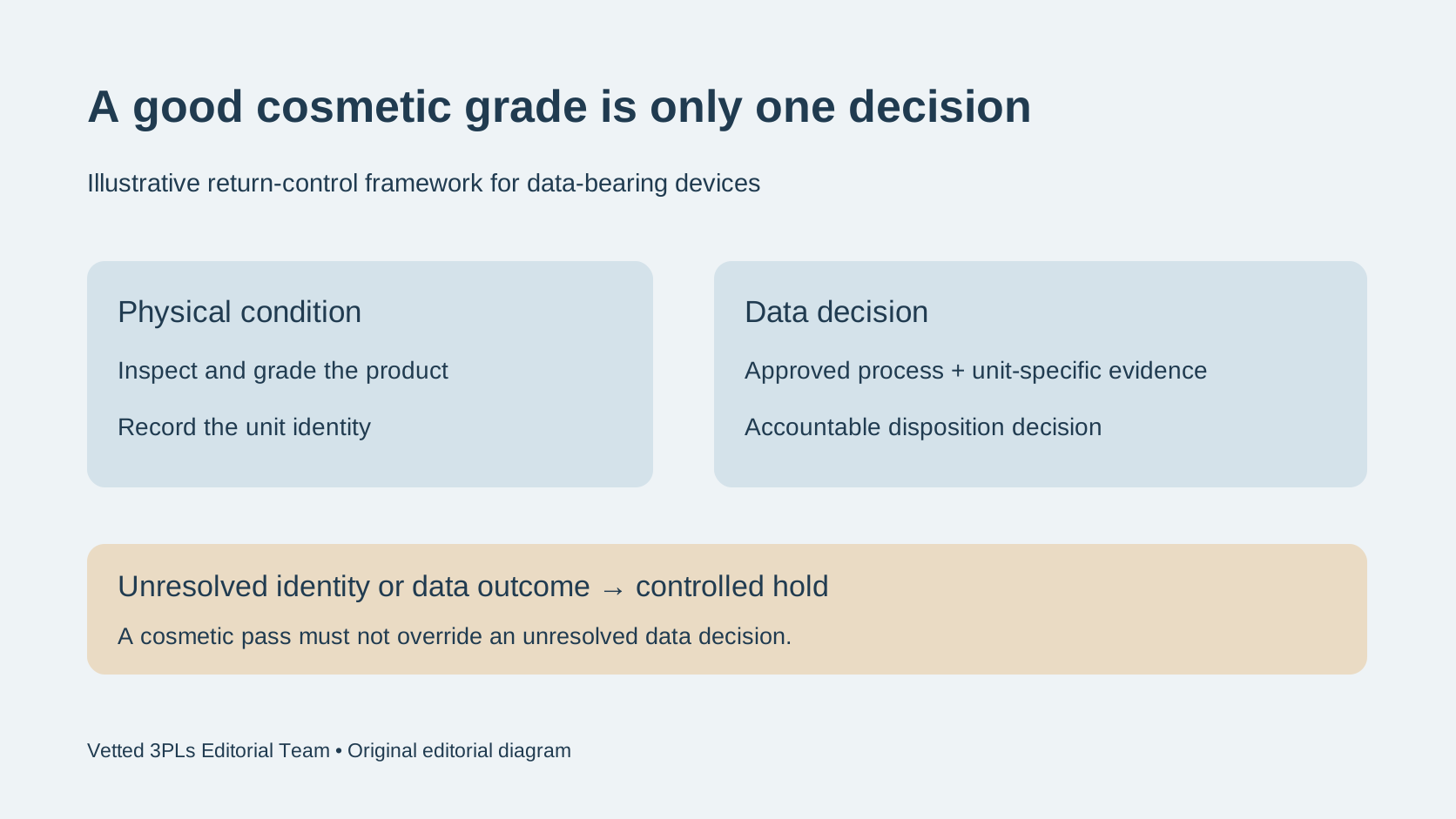
An electronics return can pass a cosmetic inspection while still holding information from its previous user. A buyer evaluating a returns provider should therefore ask a separate question from whether the device powers on: who decides that it is ready to leave controlled custody?
Scope the question to products that can store data. Do not assume every accessory needs the same process or that a generic reset instruction fits every storage medium. The brand’s responsible technical and privacy teams should define the requirements for its products.
Use current guidance without inventing a certification
NIST SP 800-88 Revision 2, finalized in September 2025, provides guidance for media sanitization programs and appropriate controls based on information sensitivity. It supersedes Revision 1. Citing that publication is not proof that a provider follows it or that a specific device was sanitized. NIST SP 800-88 Rev. 2.
Ask which approved procedure applies to each relevant product family, who maintains it and how changes are reviewed. This article proposes diligence questions, not device-erasure instructions or a compliance certification.
Connect the device to the evidence
Request a sample record that connects the returned unit’s identifier to the approved process, completion evidence and disposition decision. Avoid accepting a batch-level assurance when the buyer cannot determine whether the particular device was included.
A warehouse should also explain access during the process. Ask who may handle the device and associated records, where unresolved units wait and how they are prevented from entering ordinary resale stock. Do not ask staff to inspect personal customer content to demonstrate that controls exist.
Try three exception cases
The following is an original buyer exercise using fictional cases. No devices or providers were tested.
| Case | Question for the proposed workflow |
|---|---|
| Supported device completes the approved process | What record connects the outcome to this unit? |
| Device cannot power on or the process fails | Who controls it pending a technically approved next action? |
| Unit identifier cannot be reconciled | How is release prevented until identity is resolved? |
A completed cosmetic grade should not answer any of these data questions. Keep the operational states separate so a good-condition result cannot silently override an unresolved data decision.
Identify every handoff
If a specialist performs the work, name the party, the transfer record and the evidence expected back. Confirm who authorizes onward sale, repair, recycling or another disposition. A shipment to a subcontractor is a custody change, not proof that the requested task is complete.
Ask what happens when the specialist reports an exception. The brand needs an owner for the next decision, not an unexplained completed status in the warehouse portal.
Make the decision product-specific
Before approving a provider, have the responsible technical and privacy owners review the procedure and proposed evidence for the actual devices. Confirm current guidance and any applicable obligations rather than accepting a broad statement about secure returns.
The diligence result should be modest and useful: an identified process, accountable parties and evidence that can be linked to individual units. Where those are missing, preserve the gap and hold the release decision until it is resolved.
Related reading
Sources
- NIST current media sanitization guidance, final September 2025, superseding Revision 1 — accessed 2026-10-09.