
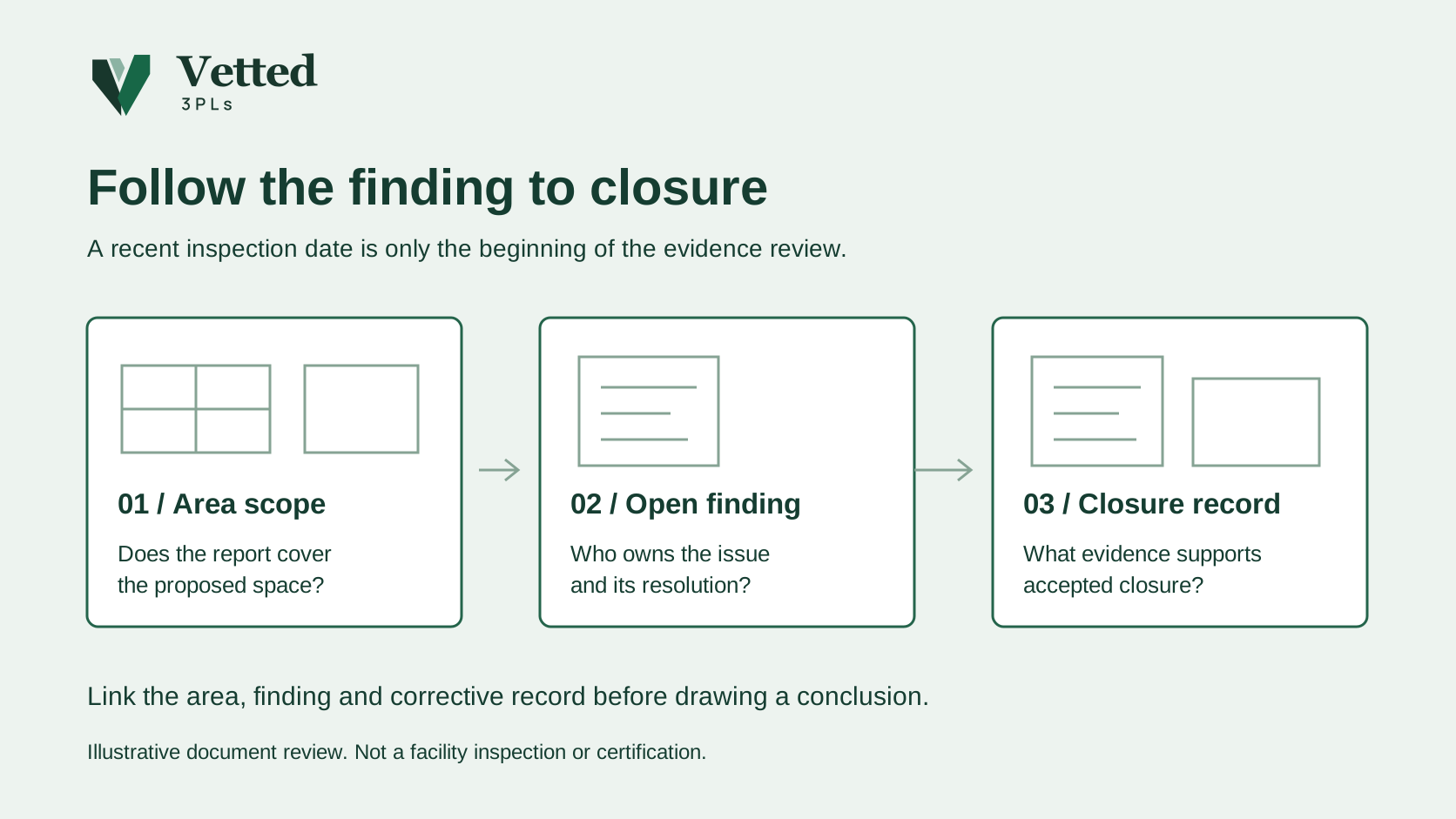
A recent report can still contain an unresolved problem A provider sends a recent inspection report. The cover looks complete, the address is familiar and the date is reassuring. Before treating it as sufficient evidence, ask what the report actually covers and whether it records anything that remains unresolved.
This is a document-review task for a buyer, not a substitute for a qualified fire-protection assessment. The useful output is a clear list of confirmed facts, unresolved questions and the professional responsible for the technical determination.
Do not turn one regulation into a universal warehouse verdict OSHA's automatic-sprinkler provision has a defined scope: it addresses systems installed to meet a particular OSHA standard, and includes an exemption for certain systems not required by OSHA. Within its applicable scope it addresses maintenance and testing. Other requirements may also apply to a facility. Establish applicability with qualified people rather than declaring every warehouse compliant or noncompliant from this page. OSHA 29 CFR 1910.159.
A buyer can still ask a practical question: who has reviewed the proposed goods, storage arrangement and relevant protection system, and what unresolved limitations affect the space being offered?
Review three fictional files consistently We constructed three document scenarios to test what a buyer could reasonably conclude. No real facilities were inspected or rated.
| Illustrative file | What it establishes | What remains open |
|---|---|---|
| Report identifies the building but not the offered storage area | A report exists for that address | Whether the scope includes the proposed space |
| Report identifies the area and records a deficiency | The finding is documented | Current status and closure evidence |
| Report plus linked corrective record identifies the same finding | A documented corrective action exists | Whether qualified review accepts closure and the proposed use |
The third file is more complete for that particular finding. It is not proof that the entire warehouse is suitable for every product or storage configuration. That distinction keeps an evidence checklist from becoming an invented certification.
Connect the paperwork to the space you will occupy Ask the provider to identify the building and area being proposed, the relevant report, its date and issuer, the open findings affecting that area, and the person responsible for resolving them. If the provider cannot share a full report, ask what appropriately redacted evidence or qualified confirmation can be supplied. Record unavailable information as unknown.
Then describe your actual product and proposed storage configuration accurately to the responsible professional. A report for an earlier arrangement should not silently become approval for a different one. Ask how the provider handles a protection-system impairment, what notice your team would receive, and who determines whether affected activity may continue. Do not design compensating measures yourself from a checklist.
Close findings with linked evidence Give every open issue a reference, owner, expected resolution date and acceptance authority. A purchase order for repair work indicates an intention to act; it is different from a completed work record and different again from accepted closure.
For selection purposes, decide which unresolved evidence prevents approval of the proposed space and which can be resolved before a defined onboarding milestone. Make those conditions explicit. The goal is not to collect the thickest binder. It is to know what the available evidence supports before inventory arrives.
Further reading
Sources
- Source 1 — accessed 2026-10-28.