
A certification logo can start a useful question. It cannot finish one. Before putting a checkmark next to a 3PL, determine what was certified and whether it covers the operation you would actually use.
This is a document-verification exercise, not a contest to collect the most badges.
Understand who makes the claim
ISO explains that certification involves assurance from an independent body; ISO itself does not provide certification. A statement that a company is certified to an ISO standard therefore calls for the certificate and issuer details, not an assumption that ISO inspected the warehouse. ISO conformity assessment.
ISO/IAF auditing-practices guidance also discusses the importance of a clear certification scope, including the relevant activities and sites. It is guidance for understanding scope, not proof that a particular provider has a valid certificate. Scope and applicability guidance.
Use a five-field evidence register
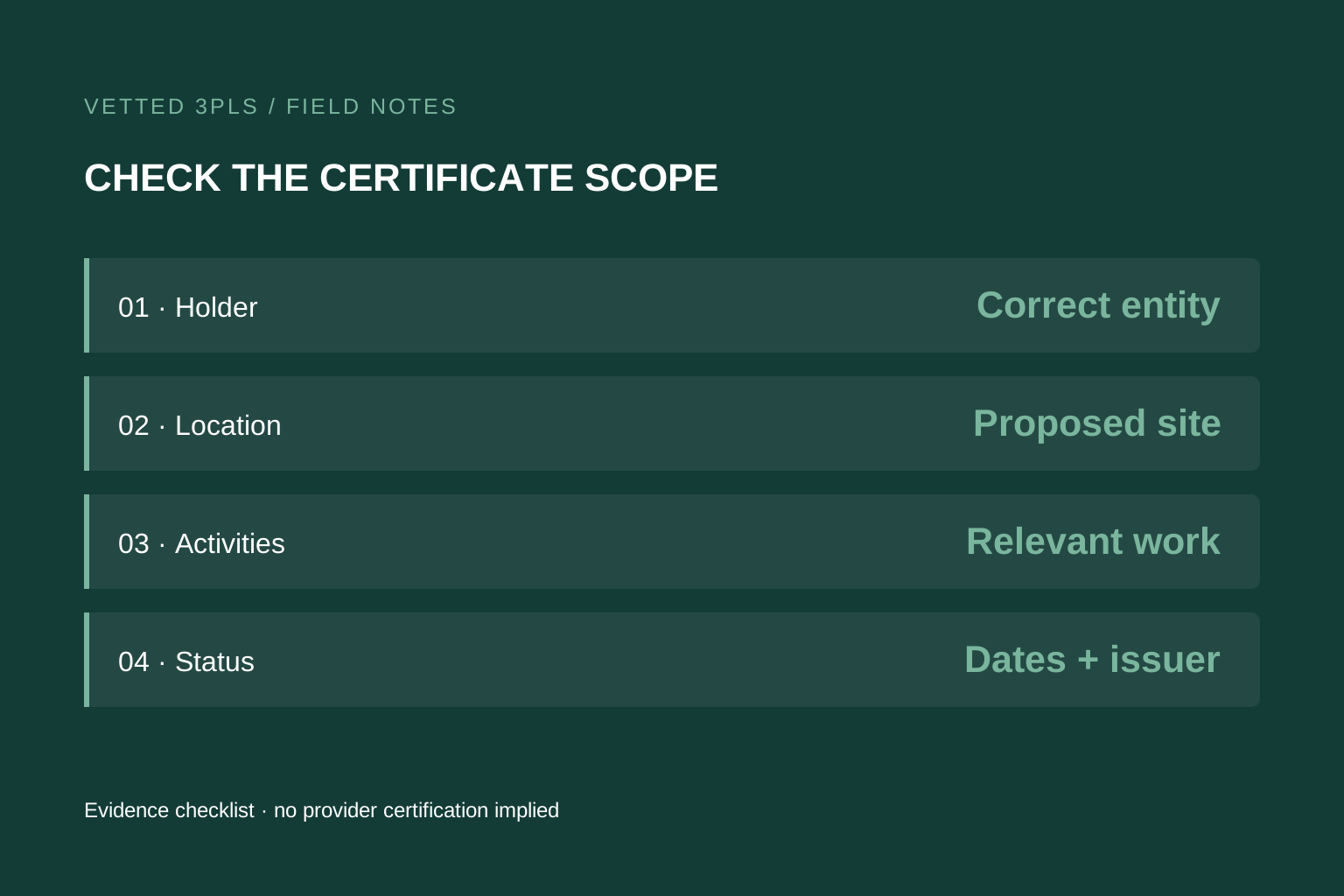
For each claimed certification, collect the legal entity, covered location or location schedule, activities, validity information and issuing body. Save the document version and date reviewed. If the certificate points to an annex, request it.
Then write the requirement beside it. “We need evidence covering pick-and-pack at the proposed warehouse” is easier to assess than “must be certified.” Some claims may be useful while still failing that specific requirement.
Three fictional documents, three different decisions
The following is a constructed desk exercise. No provider certificates were sampled or assessed.
| Fictional document | What it shows | Review outcome |
|---|---|---|
| A | Proposed entity, proposed site, relevant warehouse activities and current dates | Candidate evidence; still verify issuer and status |
| B | Related entity and headquarters only; warehouse not identified | Scope unresolved; request location coverage |
| C | Proposed site and relevant activities but expired date | Current status unresolved; request updated evidence |
None earns an automatic provider recommendation. The exercise demonstrates why a single “certificate received” column conceals different gaps.
Verify without extending the claim
Use the issuer's verification route where available, or request clarification through the agreed procurement process. Record exactly what was confirmed. A certificate number appearing in a record does not establish that every service advertised on the provider's website is covered.
If the provider operates through another warehouse company, reconcile that operating entity with the certificate and proposed contract. Do not quietly substitute a parent-company document for evidence about the actual facility.
No issuer has been contacted for this article. The steps here are recommendations for your diligence process, not completed verification.
Keep operational evidence beside certification
Even a verified certificate does not, by itself, establish your order accuracy, delivery cost, available capacity or suitability for a specific product. Ask for the relevant workflow demonstration and service commitments separately. That keeps a useful document from becoming a claim it was never intended to support.
Use “verified for the stated scope,” “clarification needed” and “not provided” as distinct statuses. Avoid declaring a provider fraudulent merely because an annex is missing from the first response; ask for the missing evidence and record the answer.
Add the register to your 3PL document checklist and cross-check the warehouse operating model. The goal is a traceable decision about your proposed operation, not a bigger row of logos.