
During a warehouse review, a buyer may hear that every forklift driver is certified. That answer is worth clarifying, especially if the proposed work changes the loads, equipment or operating area. The due-diligence question is how the warehouse establishes that the assigned people can perform the actual work.
Read the evidence in its US context
OSHA's powered-industrial-truck training guidance describes formal instruction, practical training and workplace performance evaluation. It also addresses refresher training triggers and evaluation at least once every three years. A different truck type or changed workplace conditions affecting safe operation can matter before that periodic interval.
These are US requirements and guidance, not a worldwide certification scheme. This article is a buyer's evidence framework, not a compliance inspection or a determination that a particular warehouse satisfies the standard. The employer's responsibilities are not transferred to a customer by sharing a document.
Separate three kinds of evidence
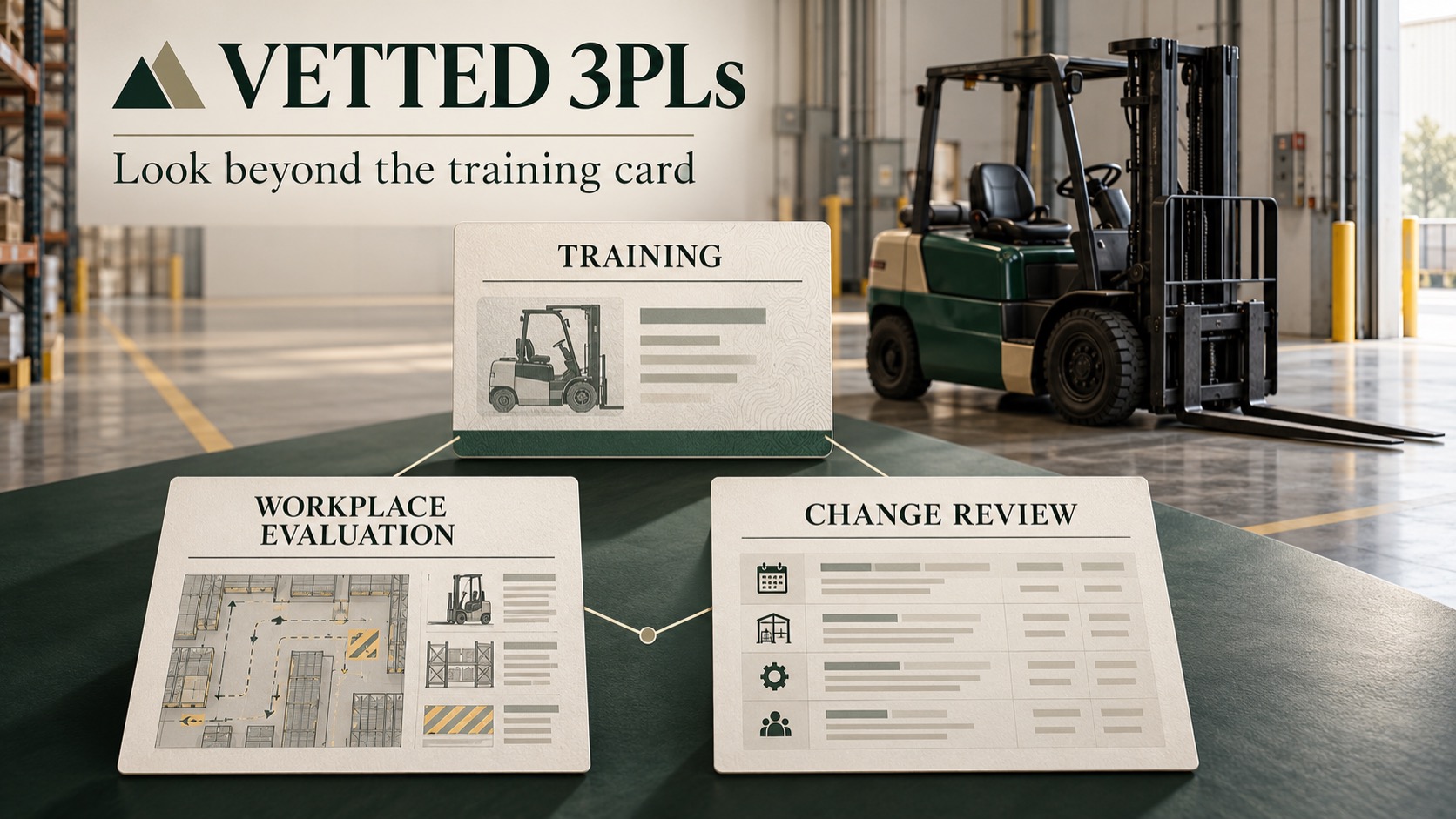
We mapped three document categories to the question each can answer. This is an original desk review framework; no operator records were inspected.
| Evidence category | What to understand | What remains unresolved alone |
|---|---|---|
| Training record | What instruction and practical training occurred | Suitability for every assignment |
| Workplace evaluation | How performance was evaluated in context | Whether later changes need attention |
| Change and refresher process | How new conditions or concerns trigger action | Whether the process is actually followed |
The exercise exposes a gap in collecting only a card or course-completion image. A course record and a workplace evaluation answer related but different questions. Neither should be represented as proof that all future assignments are covered.
Ask about the proposed operation
Describe your loads and handling requirements accurately. Ask the warehouse to explain how it reviews the equipment and operating conditions for that work. The buyer should not prescribe unsafe handling methods or make personnel decisions from a sales presentation.
If peak work moves into another area or the equipment changes, ask who decides whether additional instruction or evaluation is needed. Request a process explanation and appropriately redacted evidence showing how a recent change was handled. Do not demand unnecessary personal details about employees.
Treat an unanswered question as an evidence gap
A document with no clear connection to the assignment should prompt follow-up, not an automatic accusation. Record the missing connection, the warehouse owner of the response and the evidence needed to close it. If the proposed work depends on a capability that remains unverified, keep that scope pending.
Consider asking a qualified safety professional to review material issues. A commercial site tour cannot reproduce a workplace safety assessment, and a clean-looking warehouse is not a substitute for operating evidence.
The practical result is a more precise conversation. Instead of accepting “certified drivers” as a complete answer, the buyer can understand how training, evaluation and changed conditions are managed for the operation it intends to purchase.
Related reading
Sources
- OSHA powered industrial truck training assistance — accessed 2026-10-22.