
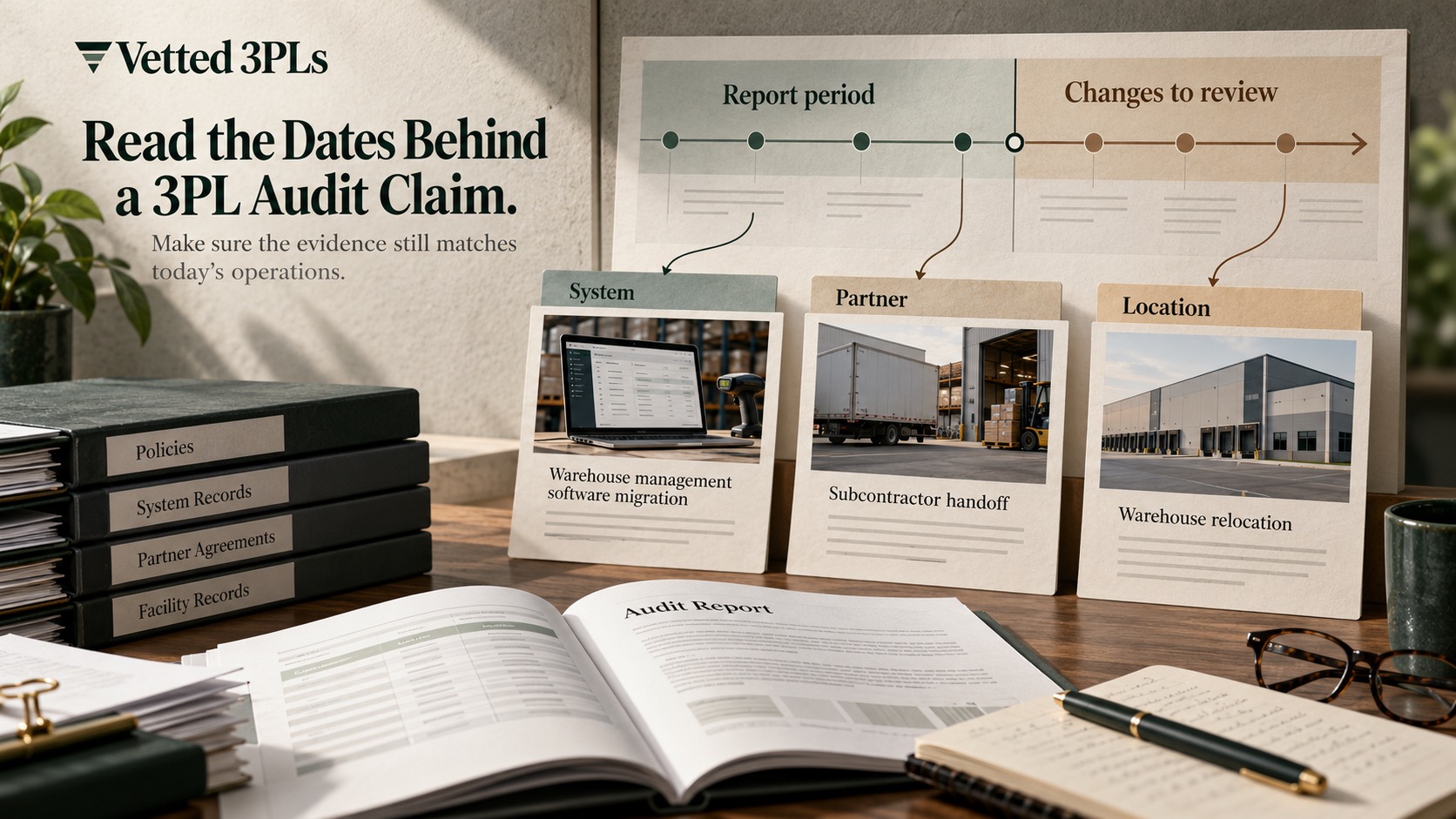
A recent upload can contain old evidence
A provider may send a report today that describes an earlier period or a different system. The email date tells you when it arrived, not what operations it covers. Before treating an audit claim as a selection advantage, identify the issuing organization, report type, covered system and dates within the document.
The AICPA describes SOC as a suite of assurance offerings connected to system-level or entity-level controls. The specific offering matters. A generic reference to “SOC” does not identify the report you need to evaluate. AICPA SOC overview.
Build a date-and-change worksheet
We constructed an evidence worksheet using three hypothetical events after a report's stated coverage end: a WMS migration, a new subcontractor and a warehouse move. These events were selected because they change technology, service responsibility and physical operations respectively. We did not inspect a private report or audit a provider.
| Hypothetical change | Question to resolve | Evidence to request |
|---|---|---|
| WMS migration | Does the report describe the system now processing orders? | System description, change record and current supporting evidence |
| New subcontractor | Which party now performs the covered work? | Responsibility map and applicable assurance information |
| Warehouse move | Does the evidence address the new operation? | Site scope and evidence relevant to the changed service |
The worksheet does not declare any change unacceptable. It identifies where relying on the old document without further review would leave a question unanswered. A change can be well managed; the buyer still needs evidence appropriate to that change.
Read the report, not only the badge
Ask an appropriately qualified reviewer to assess the actual document, including its scope, relevant findings, limitations and responsibilities assigned to the customer. The AICPA's discussion of SOC engagements distinguishes control design from operating effectiveness in its explanation of SOC 1 type 2 reporting. That distinction is a reminder to read the report type rather than treating all assurance language as equivalent. AICPA professional discussion.
Do not convert this into a universal pass/fail rule based on a fixed number of months. The relevance of the evidence depends on the service, risk and intervening changes. A short current document may answer less than a detailed older report supplemented by appropriate evidence; neither should win on file date alone.
Keep management statements identifiable
If the provider supplies an update about changes since the report, record who issued it and what it actually states. Keep it distinct from the auditor's report. Ask your reviewer what further evidence is needed for the uncovered period or changed operation. This article does not prescribe a universal validity period or claim that an update extends an auditor's opinion.
Where confidentiality limits distribution, ask for an authorized review route. An unavailable document remains unavailable evidence; do not award it an assumed pass. Equally, avoid interpreting restricted access alone as proof that the underlying controls are weak.
Turn the review into a buying condition
For each material question, record the document requested, the reviewer, the conclusion and any remaining limitation. Decide whether the gap must close before onboarding, before a particular data connection or before a new service starts. This is a proposed due-diligence workflow, not assurance itself.
The best outcome is a clear connection between the evidence and the service being purchased. A recognized report can contribute to that decision, but its name cannot replace the work of reading what it covers.
Related reading
Sources
Research accessed October 21, 2026.
- https://www.aicpa-cima.com/resources/landing/system-and-organization-controls-soc-suite-of-services
- https://www.aicpa-cima.com/professional-insights/video/maintaining-high-standards-for-soc-engagements